
Understanding the importance of cash flow and bookkeeping is vital for small business owners to understand. Effective financial management not only ensures your business meets its objectives but also helps you make informed decisions, stay compliant with regulations, and ultimately thrive! In this guide, we break down the ‘ins and outs’ of what UK small businesses need to know to efficiently manage their cashflow and bookkeeping.
What Is Cash Flow and Why Does It Matter?
Why Cashflow Matters More Than Profit Day to Day
Cashflow reflects real-time money movement. It literally shows the money coming in and out of your account. So, cashflow is unlike profit which is accounting-based and can include non-cash items such as depreciation. Even profitable businesses can struggle if they don’t have enough cash on hand to pay bills and keep up with their outflow. Cash flow management isn’t complicated if you have the right tools, habits, and support. With cloud accounting and a few good practices, it’s straightforward to get on top of it.What is Cash Flow?
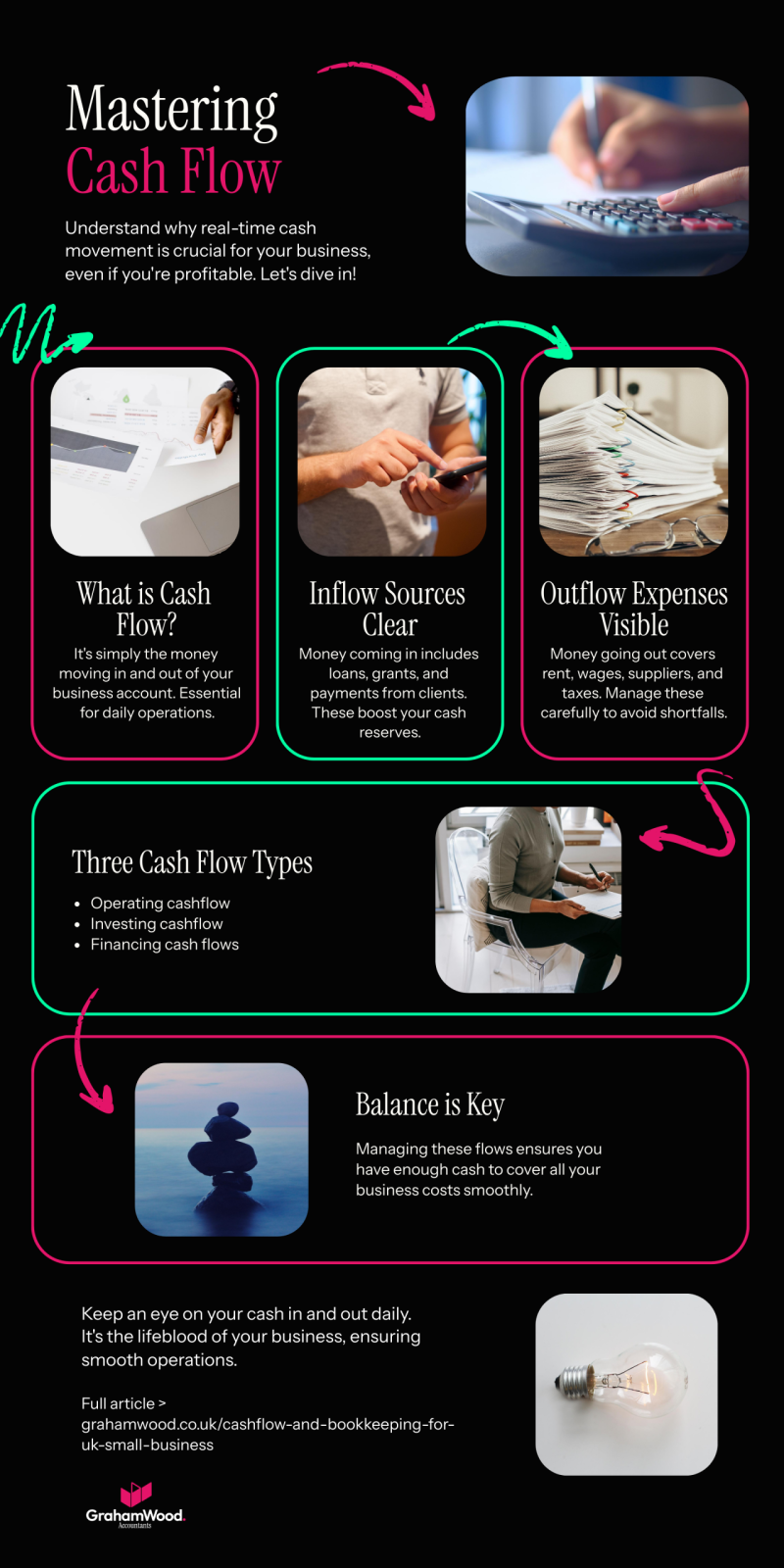
Cash flow refers to the movement of money in and out of your business. Inflow is the money coming into your business’ bank account – it flows in to your business. Examples of this could be loans, grants, or payments from clients Outflow is the money going out of your business’ bank account – it flows out of your business. Examples of this include rent payments, wages, payments to suppliers and tax. Cash flow refers to the movement of money into and out of your business. A healthy cash flow ensures that your business can cover operational costs, such as wages, rent, and suppliers, without any issues. Even if your business is profitable on paper, poor cash flow management can lead to financial instability. There are 3 main types of cash flow.- Operating cash flow represents the money your business generates from core operations, such as sales of goods or services.
- Investing cash flow refers to cash used for or generated from buying and selling assets like equipment or property.
- Financing cash flow relates to cash raised through loans or investments or paid out in dividends.
- With cash basis accounting, income and expenses are recorded when cash actually changes hands. Although this method is simpler, it might not provide a full picture of your business’s financial health.
- Accrual basis accounting records transactions when they’re incurred, regardless of cash movement. This method provides a clearer picture of the business’s overall financial situation.